#!/bin/bash
echo "This script is about to run another script."
sh ./script.shecho "This script has just run another script."https://stackoverflow.com/questions/8352851/how-to-call-one-shell-script-from-another-shell-script
#!/bin/bash
echo "This script is about to run another script."
sh ./script.shecho "This script has just run another script."https://stackoverflow.com/questions/8352851/how-to-call-one-shell-script-from-another-shell-script
#!/bin/bash
# sh_my_bach_run_this_loop.sh
for i in {1..5}
do
mysql -u USER -pPASSWORD -e " delete from table where id = $i ;"
echo "Welcome $i times"
done
...
# add permission, run this on terminal
sudo chmod +x sh_my_bach_run_this_loop.sh
# run this on terminal
./sh_my_bach_run_this_loop.sh
Sed stands for Stream Editor which parses text files and used for making textual transformations to a file.
The command specified to Sed, is applied on the file line by line.
sed [options]\'{command}\' [ file name]
sed -i \'s/{old value}/{new value}/\' [ file name ]
#!/bin/bash
# current date;
today=`date '+%Y%m%d'`;
# replace 60 first character from string on file with a " ;
sed -i 's/............................................................./,\"/g' list_$today.txt;
# replace '.pdf' from string on file with a " ;
sed -i 's/\.pdf/\"/g' list_$today.txt;
# replace " with ';
sed -i "s/\"/'/g" list_$today.txt;
# remove first character first line on file;
sed -i '1s/^.//' list_$today.txt;
# update info with the file modified
mysql -u USER -pPASSWORD DATABASE -e "
UPDATE TABLE_1 SET pdf= 1 WHERE folio in ($( cat list_$today.txt )) and pdf = '';
UPDATE TABLE_2 SET pdf= 1 WHERE folio in ($( cat list_$today.txt )) and pdf = '';
"
One of the challenges (among the many advantages) of being a sysadmin is running tasks when you'd rather be sleeping. For example, some tasks (including regularly recurring tasks) need to run overnight or on weekends, when no one is expected to be using computer resources. I have no time to spare in the evenings to run commands and scripts that have to operate during off-hours. And I don't want to have to get up at oh-dark-hundred to start a backup or major update.
The crond daemon is the background service that enables cron functionality.

# crontab -e
SHELL=/bin/bash
MAILTO=root@example.com
PATH=/bin:/sbin:/usr/bin:/usr/sbin:/usr/local/bin:/usr/local/sbin
# For details see man 4 crontabs
# Example of job definition:
# .---------------- minute (0 - 59)
# | .------------- hour (0 - 23)
# | | .---------- day of month (1 - 31)
# | | | .------- month (1 - 12) OR jan,feb,mar,apr ...
# | | | | .---- day of week (0 - 6) (Sunday=0 or 7) OR sun,mon,tue,wed,thu,fri,sat
# | | | | |
# * * * * * user-name command to be executed
# backup using the rsbu program to the internal 4TB HDD and then 4TB external
01 01 * * * /usr/local/bin/rsbu -vbd1 ; /usr/local/bin/rsbu -vbd2
# Set the hardware clock to keep it in sync with the more accurate system clock
03 05 * * * /sbin/hwclock --systohc
# Perform monthly updates on the first of the month
# 25 04 1 * * /usr/bin/dnf -y updat
grep CRON /var/log/syslogsudo chmod +x filename.binhttps://opensource.com/article/17/11/how-use-cron-linux
npm ERR! code ELIFECYCLE
npm ERR! errno 1
npm ERR! electron@12.0.11 postinstall: `node install.js`
npm ERR! Exit status 1
Solution:
sudo npm install -g electron --unsafe-perm=true --allow-root
curl -sL https://deb.nodesource.com/setup_10.x | sudo -E bash - sudo apt-get install -y nodejs
Sometimes the folks supporting the builds have a glitch, and the ArmV6 version of the build doesn’t get published…. so it will complain with this message:
## You appear to be running on ARMv6 hardware. Unfortunately this is not currently supported by the NodeSource Linux distributions. Please use the ‘linux-armv6l’ binary tarballs available directly from nodejs.org for Node.js v4 and later.”
wget https://nodejs.org/dist/v10.15.3/node-v10.15.3-linux-armv6l.tar.xz tar xvf node-v10.15.3-linux-armv6l.tar.xz cd node-v10.15.3-linux-armv6l sudo cp -R bin/* /usr/bin/ sudo cp -R lib/* /usr/lib/ sudo apt-get update && sudo apt-get upgrade sudo apt-get install build-essential
https://bloggerbrothers.com/2017/03/04/installing-nodejs-on-a-raspberry-pi/
sudo systemctl enable ssh
sudo systemctl start ssh
ssh pi@[<em>raspberrypi_ip_address</em>]
###
Secure Shell (SSH) is a feature of Linux that allows you to effectively open a terminal session on your Raspberry Pi from the command line of your host computer.
Recent versions of Rasbpian do not enable SSH access by default. You can use an empty boot file or raspi-config.
For truly headless setups, if you can't ssh into your Pi you can't turn on ssh!
It's a bit of conundrum! But you can easily get around it by using a trick in Raspbian. To do so, we simply create a file called ssh. This file does not exist by default and needs to be created. It can be empty. The system looks for it at boot time and will enable ssh if it is there. It is then deleted. So just create a new file and save it as ssh to the boot folder. If you plug the SD card into your computer, just put that ssh file directly in the SD card director's root directory

In order to do this, open LX Terminal on your Pi and enter the following command to start Raspi Config:

Scroll down to the “ssh” option, it might be under Interfaces or Advanced (they move it around)

Hit the Enter key and then select “Enable”

A script will run and then you will see the following as confirmation:

You will need to reboot your Pi to make the change permanent
https://learn.adafruit.com/adafruits-raspberry-pi-lesson-6-using-ssh/enabling-ssh
# ls /dev/sd*
# grub-install /dev/sda
https://www.tecmint.com/rescue-repair-and-reinstall-grub-boot-loader-in-ubuntu/
You can force install of Pro with a file:
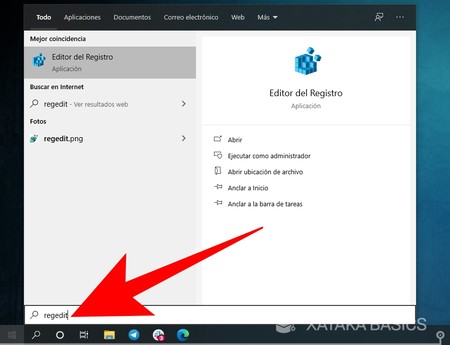
Lo primero que tienes que hacer es abrir el menú de inicio y escribir regedit. Como resultado, te aparecerá el Editor del Registro de Windows, y tienes que entrar en él para hacer los cambios que desactiven los puertos USB.
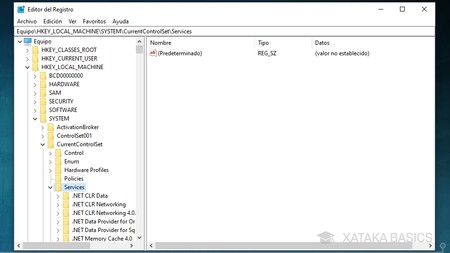
Se abrirá la ventana con el Editor del Registro. En ella, en la columna de la izquierda tendrás las carpetas por las que tienes que navegar hasta llegar a los elementos que quieras cambiar, los cuales aparecerán en la parte de la derecha. Aquí, tienes que llegar a la configuración de los USB, para lo que tendrás que navegar y llegar a la carpeta HKEYLOCALMACHINE\SYSTEM\CurrentControlSet\Services\UsbStor.
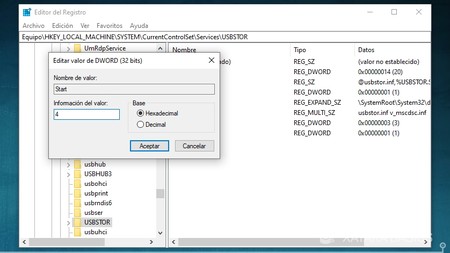
Se abrirá una ventana en la que vas a poder cambiar el valor hexadecimal del campo Start. En esta ventana, cambia el valor 3 por el 4, escribiendo un 4 en su ligar, y aceptando. Ahora, reinicia el ordenador para aplicar los cambios, y los puertos USB quedarán inutilizados. Si te arrepientes, tendrás que volver hasta el campo Start y abrirlo para volver a poner el valor 3, que es el que activa los puertos USB.
https://www.xataka.com/basics/como-bloquear-puertos-usb-ordenador
https://www.toptal.com/developers/gitignore
EDIT ".gitignore"
git rm -r --cached .
git add .
## .gitingnore example ---
## Ignore Visual Studio temporary files, build results, and
## files generated by popular Visual Studio add-ons.
##
## Get latest from https://github.com/github/gitignore/blob/master/VisualStudio.gitignore
# User-specific files
*.rsuser
*.suo
*.user
*.userosscache
*.sln.docstates
# User-specific files (MonoDevelop/Xamarin Studio)
*.userprefs
# Build results
[Dd]ebug/
[Dd]ebugPublic/
[Rr]elease/
[Rr]eleases/
x64/
x86/
[Aa][Rr][Mm]/
[Aa][Rr][Mm]64/
bld/
[Bb]in/
[Oo]bj/
[Ll]og/
# Visual Studio 2015/2017 cache/options directory
.vs/
# Uncomment if you have tasks that create the project's static files in wwwroot
#wwwroot/
# Visual Studio 2017 auto generated files
Generated\ Files/
# MSTest test Results
[Tt]est[Rr]esult*/
[Bb]uild[Ll]og.*
# NUNIT
*.VisualState.xml
TestResult.xml
# Build Results of an ATL Project
[Dd]ebugPS/
[Rr]eleasePS/
dlldata.c
# Benchmark Results
BenchmarkDotNet.Artifacts/
# .NET Core
project.lock.json
project.fragment.lock.json
artifacts/
# StyleCop
StyleCopReport.xml
# Files built by Visual Studio
*_i.c
*_p.c
*_h.h
*.ilk
*.meta
*.obj
*.iobj
*.pch
*.pdb
*.ipdb
*.pgc
*.pgd
*.rsp
*.sbr
*.tlb
*.tli
*.tlh
*.tmp
*.tmp_proj
*_wpftmp.csproj
*.log
*.vspscc
*.vssscc
.builds
*.pidb
*.svclog
*.scc
# Chutzpah Test files
_Chutzpah*
# Visual C++ cache files
ipch/
*.aps
*.ncb
*.opendb
*.opensdf
*.sdf
*.cachefile
*.VC.db
*.VC.VC.opendb
# Visual Studio profiler
*.psess
*.vsp
*.vspx
*.sap
# Visual Studio Trace Files
*.e2e
# TFS 2012 Local Workspace
$tf/
# Guidance Automation Toolkit
*.gpState
# ReSharper is a .NET coding add-in
_ReSharper*/
*.[Rr]e[Ss]harper
*.DotSettings.user
# JustCode is a .NET coding add-in
.JustCode
# TeamCity is a build add-in
_TeamCity*
# DotCover is a Code Coverage Tool
*.dotCover
# AxoCover is a Code Coverage Tool
.axoCover/*
!.axoCover/settings.json
# Visual Studio code coverage results
*.coverage
*.coveragexml
# NCrunch
_NCrunch_*
.*crunch*.local.xml
nCrunchTemp_*
# MightyMoose
*.mm.*
AutoTest.Net/
# Web workbench (sass)
.sass-cache/
# Installshield output folder
[Ee]xpress/
# DocProject is a documentation generator add-in
DocProject/buildhelp/
DocProject/Help/*.HxT
DocProject/Help/*.HxC
DocProject/Help/*.hhc
DocProject/Help/*.hhk
DocProject/Help/*.hhp
DocProject/Help/Html2
DocProject/Help/html
# Click-Once directory
publish/
# Publish Web Output
*.[Pp]ublish.xml
*.azurePubxml
# Note: Comment the next line if you want to checkin your web deploy settings,
# but database connection strings (with potential passwords) will be unencrypted
*.pubxml
*.publishproj
# Microsoft Azure Web App publish settings. Comment the next line if you want to
# checkin your Azure Web App publish settings, but sensitive information contained
# in these scripts will be unencrypted
PublishScripts/
# NuGet Packages
*.nupkg
# The packages folder can be ignored because of Package Restore
**/[Pp]ackages/*
# except build/, which is used as an MSBuild target.
!**/[Pp]ackages/build/
# Uncomment if necessary however generally it will be regenerated when needed
#!**/[Pp]ackages/repositories.config
# NuGet v3's project.json files produces more ignorable files
*.nuget.props
*.nuget.targets
# Microsoft Azure Build Output
csx/
*.build.csdef
# Microsoft Azure Emulator
ecf/
rcf/
# Windows Store app package directories and files
AppPackages/
BundleArtifacts/
Package.StoreAssociation.xml
_pkginfo.txt
*.appx
# Visual Studio cache files
# files ending in .cache can be ignored
*.[Cc]ache
# but keep track of directories ending in .cache
!?*.[Cc]ache/
# Others
ClientBin/
~$*
*~
*.dbmdl
*.dbproj.schemaview
*.jfm
*.pfx
*.publishsettings
orleans.codegen.cs
# Including strong name files can present a security risk
# (https://github.com/github/gitignore/pull/2483#issue-259490424)
#*.snk
# Since there are multiple workflows, uncomment next line to ignore bower_components
# (https://github.com/github/gitignore/pull/1529#issuecomment-104372622)
#bower_components/
# RIA/Silverlight projects
Generated_Code/
# Backup & report files from converting an old project file
# to a newer Visual Studio version. Backup files are not needed,
# because we have git ;-)
_UpgradeReport_Files/
Backup*/
UpgradeLog*.XML
UpgradeLog*.htm
ServiceFabricBackup/
*.rptproj.bak
# SQL Server files
*.mdf
*.ldf
*.ndf
# Business Intelligence projects
*.rdl.data
*.bim.layout
*.bim_*.settings
*.rptproj.rsuser
*- Backup*.rdl
# Microsoft Fakes
FakesAssemblies/
# GhostDoc plugin setting file
*.GhostDoc.xml
# Node.js Tools for Visual Studio
.ntvs_analysis.dat
node_modules/
# Visual Studio 6 build log
*.plg
# Visual Studio 6 workspace options file
*.opt
# Visual Studio 6 auto-generated workspace file (contains which files were open etc.)
*.vbw
# Visual Studio LightSwitch build output
**/*.HTMLClient/GeneratedArtifacts
**/*.DesktopClient/GeneratedArtifacts
**/*.DesktopClient/ModelManifest.xml
**/*.Server/GeneratedArtifacts
**/*.Server/ModelManifest.xml
_Pvt_Extensions
# Paket dependency manager
.paket/paket.exe
paket-files/
# FAKE - F# Make
.fake/
# JetBrains Rider
.idea/
*.sln.iml
# CodeRush personal settings
.cr/personal
# Python Tools for Visual Studio (PTVS)
__pycache__/
*.pyc
# Cake - Uncomment if you are using it
# tools/**
# !tools/packages.config
# Tabs Studio
*.tss
# Telerik's JustMock configuration file
*.jmconfig
# BizTalk build output
*.btp.cs
*.btm.cs
*.odx.cs
*.xsd.cs
# OpenCover UI analysis results
OpenCover/
# Azure Stream Analytics local run output
ASALocalRun/
# MSBuild Binary and Structured Log
*.binlog
# NVidia Nsight GPU debugger configuration file
*.nvuser
# MFractors (Xamarin productivity tool) working folder
.mfractor/
# Local History for Visual Studio
.localhistory/
# BeatPulse healthcheck temp database
healthchecksdb
$_GET['q'] = 1;
include('search.php);
https://stackoverflow.com/questions/5675550/php-include-with-get-attributes-include-file-phpq-1
<select id = "EMPRESA" name="EMPRESA" class="form-control">
<?php
$query = "SELECT * FROM table WHERE col = '$coordinador' ";
$result = $conn->query($query);
while($row=$result->fetch_assoc()){
?>
<option value="<?php echo isset($row['EMPRESA']) ? $row['EMPRESA'] : ''; ?>"><?php echo isset($row["EMPRESA"]) ? $row["EMPRESA"] : ''; ?></option>
<?php } ?>
</select>
</div>
</div>
from : https://stackoverflow.com/questions/32606964/want-to-show-data-in-combo-box-from-mysql-table
Cuando se esta desarrollando una aplicacion y cuando se quiere dar acceso a los usuarios, el problema es siempre pensar que password ponerle por default, aquí hay una forma fácil de generar passwords aleatorios, estos de alguna forma son seguros, debido a que no son comunes, la instrucción es simple:
select substring(md5(rand()),-8)